Product
Ageni Apex
Describe the app; get working software you can charge for, ready to run.
Join the waitlistShip sellable software in seconds.
Describe the app; get working software you can charge for, ready to run.
See it work
Three self-contained views of Ageni Apex: how it works, the outcome it moves, and the profit lever it pulls.
What Ageni Apex gets you
Every one of these is a real outcome the engine helps a buyer reach — not a feature list.
Ship sellable software in seconds.
↑ speedTurn an idea into a running app now.
↑ speedCharge for software you didn't hand-code.
↑ reachCut the cost of building an app.
↓ costGrow output without hiring engineers.
↓ timeTurn an existing codebase into a model.
↑ speedReplace a stack of dev tools.
↓ costAutomate the repetitive build work.
↓ timeShip on one clean architecture every time.
↑ reliabilityMonetize your know-how as a product.
↑ reachGo from many repos to one model.
↓ timeKeep every app sellable by construction.
↑ reliability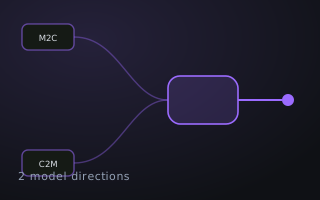
One surface — replaces the stack you pay for today


Good ideas die in the backlog.
You know exactly what to build, but shipping means weeks of scaffolding before a single customer can pay you. Apex closes that gap: describe the app, and Model-to-Code hands you a deployed, sellable package in seconds.
A good idea sits in the backlog for weeks.
Model-to-Code scaffolds the app the moment it's described.
A deployed, sellable package, ready in seconds.
Apex lets users leverage AML to generate code with code. Model-to-Code scaffolds ready-to-monetize software in seconds as a deployed npm package; Code-to-Model creates model instances from existing datasets across one or many GitHub repositories.
- 1 Model to Code: scaffold a deployed npm package
- 2 Code to Model: instantiate models from GitHub repos
- 3 Ship monetizable software in seconds
- 4 Built on AML aggregates and process managers