Product
Ageni Market
One shared map of sectors and segments feeds every product. Sales, marketing, and product finally target the same buyer.
Join the waitlistKnow exactly who to sell to.
One shared map of sectors and segments feeds every product. Sales, marketing, and product finally target the same buyer.
See it work
Three self-contained views of Ageni Market: how it works, the outcome it moves, and the profit lever it pulls.
What Ageni Market gets you
Every one of these is a real outcome the engine helps a buyer reach — not a feature list.
Know exactly who to sell to.
↑ reliabilityTarget the right buyers, waste nothing.
↓ costUnderstand your market at a glance.
↑ speedRoute sector questions to the right answer.
↑ speedSegment individuals, businesses, and government.
↑ reliabilitySpot a new market to enter.
↑ reachSpeak your buyer's industry language.
↑ reliabilityOne classification across every tool.
↑ reliabilityStop guessing your addressable market.
↑ reliabilityFind look-alike customers fast.
↑ reachAim a campaign with precision.
↑ speedGrow by picking the right segment first.
↑ reach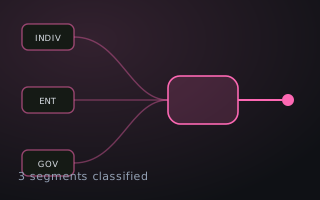
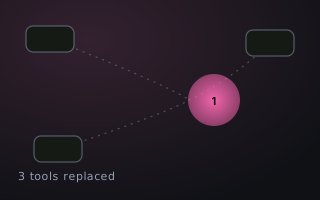
One surface — replaces the stack you pay for today


You're guessing who to sell to.
Without one shared classification, sales, marketing, and product each define the market their own way, and campaigns aim at three different audiences. Market gives every product the same sector and segment vocabulary, so everyone targets the same buyer.
Three teams aim a campaign at three different audiences.
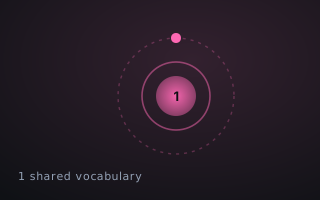
One shared sector and segment map feeds every product.
Sales, marketing, and product target the same buyer.
Market owns ageni's sector and market classification taxonomy — the vocabulary behind sector graphs and segment targeting. Products like ask and chat consume it to route sector queries and to target individual, enterprise, and government segments.
- 1 Canonical sector and industry taxonomy
- 2 Powers ask's sector-graph routing
- 3 Segments individual, enterprise, and government buyers
- 4 One classification vocabulary across products